Showing posts with label self reliance. Show all posts

Thursday, October 6, 2011

Canning meat...woot, woot!!!


All American canner
 A big thanks to those taking our survey on what you would like to see coming up on our blog - the winner for September was canning meat..... so here we go!!  (Feel free to leave other topic suggestions in our comments section or via email!)   


At least for us, it is really intimidating to think about canning, with the possibility of spoiling it or it not turning out right (wow, I think that is a theme for me at least - a fear of screwing everything up!!!)  Perhaps because home preservation and canning has become a lost art, something our grandparents did a lot of, but it waned in (some of) our parents generation, with the skills to accomplish it going by the wayside.  It is experiencing a bit of a comeback, but there are a lot of questions being asked about the practical "how to's".

Just a few notes before we get started:
*  Meat HAS to be canned in a pressure canner cooker with a gauge that shows the pounds of pressure in the canner, as opposed to a water bath canner.
*  Ground meat of any kind needs to be cooked before it is canned, and needs water added to the ground meat for the canning process.
*  It is advised that you use  new jars or jars that you know the history of as opposed to jars that are 'recycled' from garage sales, etc.  We were surprised that we did not see a major inconvenience using regular mouth jars as opposed to wide mouth jars for canning meat.
*  Pint jars hold approximately 1 pound of meat, quart jars hold approximately 2 pounds of meat.

Here is the breakdown:

1.  Put about 3 inches of water in the bottom of your pressure canner cooker and put the heat on high, WITHOUT THE LID ON, to begin heating the canner.  This is a multi-tasking tip that will save about 30 minutes of pre-heating time.
2.  Start boiling a small pan of water to warm the lids in.  Put the lids in about 2 minutes before you are ready to use them - if they are heated too long the wax on the seal can be compromised.
3.  Load the jars full of raw meat, leaving 1/2" head space at the top.  The jars do not need to be sterile, but they should be clean :0)
4.  Add 1/4 - 1/2 tsp salt to each jar.  DO NOT add other spices.
5.  Wipe the rim of the jar with a clean towel to make sure it is clean and dry so it can make a good seal. (This is probably a good time to prep your lids - turn off the heat once the water is boiling and put the lids in for about 2 minutes.)
6.  Put the lids on the jars being careful not to touch the underside of the lid.  Screw a ring onto the jar making it finger tight.  "What is finger tight", you say?  Screw the lid on tight, then unscrew it slightly, maybe 1/4 turn, so that the air can escape during the canning process.
7.  Place the jars into the canner, staggering the top and bottom layers.  By now, if you started your water in the beginning, it is boiling (yeah!).  We were worried it would crack the jars, but did not have any trouble with that. If you did not pre-heat your water, just make sure you put the water in the canner BEFORE the jars.  Also, even if you will only be canning 1 layer of jars, ALWAYS use the rack to keep the jars from being in contact with the bottom of the cooker.  If canning 2 layers of jars, place a second rack between the first and second layer of jars.
8.  We used a metal-to-metal canner for this project, meaning there is no rubber gasket between the cooker and the lid.  For a metal-to-metal canner you will need to line the rim of the canner with petroleum to keep the lid from sticking and difficulty in removing it, to prevent scratching, and maintaining a steam tight seal, and damage overall.
If you are using another type of canner, please read your canner's instructions for specific details for the gasket and sealing.
9. Put the lid on and tighten the wing nuts - specifically, tighten wing nuts on opposite sides at the same time (as in a star pattern), making sure the same size gap is maintained around the cooker.  Think "finger tight", not Fort Knox :0)  The wing nuts can be loosened to make them "taller" if it seems it is too short to reach over the lid.  NEVER tighten one wing nut at a time.  **If this is the first time using your pressure canner, you may want to do this without preheating the water, as it took us a few tries to get the hooks to line up right and figure out how to lengthen the wing nuts (newbies!!), having a hot pan may make for a painful learning curve.
10. Place the canner on full heat if you did not begin pre-heating in step one.  The canner will heat the water to steaming, and the steam will "vent" from the pressure valve where the pressure regulator weight is.  It is sometimes really hard to see this steam coming out, as it takes FOREVER it seems, so watch closely for it.  This allows the air to come out of the jars.  Vent for 7-10 minutes.
11.Place the pressure regulator weight on the pressure valve.  **Check your altitude and your canner instructions for the appropriate weight and time for your canner**.  For our high altitude location, we set the pressure regulator on 10 pounds.
12. The canner will continue to pressurize.  Begin your cooking time from when the pressure regulator starts to "rock".  This did not rock the way we expected - we were expecting it to rock the same as our smaller pressure cooker does (not canner) when we cook potatoes, etc., and it was more of a loud whistle and light jiggle. We were confused initially - while the pressure gauge shows a numeric value, it is not related to the pressure regulator weight (10lbs, in our case), so measure your cook time from the pressure regulator rocking, not what the pressure gauge needle says.  Also, the temperature fluctuated a lot more than we thought - you will need to continually monitor the pressure and canner, making small adjustments for most of the timed cooking.
Just finished cooking.
13. At the end of the cook time, simply turn off the heat.  Allow the pressure canner to release the pressure on its own with time.  Once the pressure gauge (the one with the needle) says there is no longer any pressure in the canner, unscrew the wing nuts (opposite sides at the same time again) and take off the lid.
14. Remove the jars (using a jar lifter - the jars will be HOT, the juices inside will be boiling), and set on top of the counter with a towel already on it. Choose a counter where there will be no drafts hitting it.
15. Using a hot pad, tighten the jars the rest of the way to help finish the sealing process.  Remove the water from the canner.
16. Let set over night, or until cool.
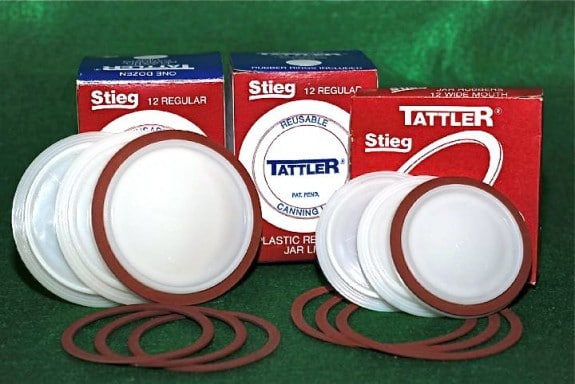


Tattler reusable canning lids. Are supposed to be awesome and easy peezy to use, were dying to try them...next time. Just in case you want to try them before we do here's the cheapest place we found them at. Not to mention there preparedness factor. Happy canning!

     We have canned meat a whole three times now but we already feel very comfortable and confident with the whole process. And it feels great to be able to look at what we have accomplished. Not to mention that your canned meat will taste better then any canned meat you could buy from the grocery store...at least any that I have tasted. Now be confident and go can some meat!


We have hard water so to get rid of the this add about a tsp or so of vinegar to your canning water.


Saturday, October 1, 2011

Homemade Yogurt - Yum!!!!


Over the last few years my family and I have become more and more vegetarian on our quest for healthier eating.  We jokingly refer to ourselves as 85% vegetarian since we only eat meat in small amounts about 2-3 times a week, lol!  With small children and being pregnant and nursing, I do worry about getting the nutrients that come from dairy that I need for myself as well as for my family.  I do not drink milk, and rarely eat store bought yogurt.  We do still eat cheese and eggs (sparingly), and butter (not so sparingly). 

My kids will eat just about anything, but I have to admit I am a bit of a yogurt snob – I don’t eat any low calorie type sugars (i.e. aspartame, sucralose, sweet-n-low, etc.), and I love really thick and creamy yogurt - if it could have the consistency of cream cheese, I would probably love it!  That being said, I have recently been introduced to drinkable yogurt, similar to kefer, and have really liked it. 

Yogurt is a lacto-fermented food, meaning that there are lots of healthy probiotics for your gut.  Even a little bit can go a long way for your health.  For those that are lactose intolerant, yogurt can usually still be consumed since the lactose has already been digested by the live/active cultures in the yogurt :0)

I was intimidated to make my own yogurt, the idea of having to use coolers with towels in a bathtub, inoculating yogurt, worrying about the temperature, etc., I was totally freaked that I would screw it up.  But then, as someone said, you can't exactly screw it up when you are growing something in it on purpose to 'spoil' it.  Two years ago my husband got me a refurbished Excalibur dehydrator (thank you honey!!) so it wasn't as intimidating to try making yogurt.  I tried the cooler method for this post, which was not as difficult as I thought it would be.  

So, let’s make some yogurt!!!
Start by pouring your milk into a heavy bottomed pan.  **See below for approximate amounts / recipe**  I usually do 2 quarts at a time.  I have experimented with using ¼ part half & half or heavy whipping cream to get the creamy layer on the top, but usually I just use organic whole milk. 
Turn the heat to medium and whisk occasionally to keep the bottom from scalding.  Using a candy thermometer to watch the temperature, heat the milk to 180°F.  Turn off the heat and let the milk sit until the temperature cools to approximately 112°F. DO NOT STIR during this time.  Once the milk cools, there will be a thin film of ‘stuff’ on top of the milk. Use a fork or spoon to skim it off the top and toss it in the sink.


There are several ways to inoculate your yogurt.  You can purchase ‘yogurt starter’ at natural grocery stores in the refrigerated section, usually by the yogurt (I think I got mine at whole foods).  Alternatively, and much easier, you can use regular yogurt that has live cultures in it.  The label on the yogurt will indicate that it has ‘X’ number of live or active cultures in it.  I think they usually have at least 3, while the one I used today has 6.  I have heard you can use whatever kind of yogurt you want, but like I said earlier, I am a yogurt snob, so I usually use the starter, although today I tried Stonyfield vanilla (no artificial sugars :0). 
I split my milk in half today, using yogurt starter in one batch and ready-made yogurt in the other batch, so I could try the store bought yogurt method. 
For the yogurt starter, you put about ½ a cup of milk in a jar and add the starter (a powdery substance) and shake it to mix it well.
If you are using ready-made yogurt, add approximately 6 oz. ready-made yogurt per gallon of milk (give or take – it is not an exact science, thank goodness!)
After it is thoroughly mixed, pour the milk with the starter (or ready-made yogurt) in it back into your pan with the remaining milk and mix / whisk well.
Pour the mixture into pint or quart glass jars (wide mouth jars are great since it is easier to get the yogurt out later!!)
I divided my batch between the dehydrator and the cooler so I could try the cooler method of incubating the yogurt.  I put ½ of each batch in the cooler and the other ½ into the dehydrator.

To incubate the yogurt in a dehydrator, put a lid and ring on the jar.  Place in the dehydrator at approximately 115°F for about 4 hours.
To incubate the yogurt in a water bath, cover the top of the jar with plastic wrap (i.e. Saran wrap), and then with the lid/ring.  Immerse the jars in water that is approximately 112°F (I fill it just below the lid so I don’t have to worry about water getting into the yogurt).  Put the cooler out of the way (i.e. in a bathtub, etc) and leave for approximately 6 hours. 
[NOTE:  I checked the water temp half way through (seeing as how I am up with a baby half the night anyways, lol!) and was worried it was too cool, so I added some hot water to it.  When it was done, the water still seemed cool, so I put my thermometer in it and it was at 112°F, which felt a little cool to the touch, but the yogurt turned out fine.]
Once the yogurt is done, put the jars in the refrigerator.  It will look a little soft, but after it cools off for a couple of hours it firms up a bit. 

I didn't notice a difference between the yogurt that was made with the starter or the yogurt that was made with store-bought yogurt.  I did notice a slight but negligible difference in the yogurt that was incubated in the dehydrator and the yogurt from the cooler when they first came out, but after they had been refrigerated, I did not notice a difference.
I usually add agave nectar to sweeten it, and love the taste :0)  My kids like to add honey to sweeten it – I think it gives it a honey flavor, but isn’t particularly sweet.  They also like to put in frozen fruit - the juice flavors the yogurt and gives it a little bit extra flavor.
Bon appétit!!
**The Yo’gourmet starter I used combines 1 quart milk with 5 grams (1 pouch) starter.  If you are using ready-made yogurt, combine 1 gallon of milk with 6 oz. ready-made yogurt.

Update 10-3-11
Yeah, I know I just posted this, but after visiting Kitchen Stewardship to review cooler temperatures for yogurt, I learned that organic milk sold in cardboard cartons is almost always pasteurized in "ultra-high-temperatures" (UHT), meaning it could sit on the counter for months and still be shelf-stable / "drinkable".  While raw milk would be wonderful, it is illegal where we live, so next time around I will be making yogurt with regular store-bought whole milk.  Best of luck!!  :0)
(to see Katie from Kitchen Stewardship's review on skim, whole, organic, and raw milk check http://www.kitchenstewardship.com/2009/04/13/monday-mission-homemade-yogurt-the-easy-way/ )

Thursday, September 22, 2011

Globe Mallow, using local medicinal herbs.


Before I jump into this post (If you want to skip some jabbering and go to the meat of the post skip this paragraph) let me share a little herb humor...yeah that's what I said, herb humor. Don't hear those words together much do ya? When I was going to school at NMSU I took a communications class, you know the one where they make you speak in front of the class, whoop-de-doo (said listlessly). Could it be that I was only 19 (wow it feels so long ago, almost 10 years!). Ok back on topic (I do have A.D.D. after all...rabbit, squirrel...focus, focus). I shared this little bit of humor when I gave an 'informative' speech on Rosemary, I can imagine that my class thought I was some kind of weirdo, but I was talking about what I knew and loved...herbs; the legal kind. Well I guess mari-ju-ana is legal here in NM now. You know how people can tease us herb lovers..."ohhh you like herbs" insinuating you know...Okay, so here is the herb humor I was telling you about 10 paragraphs ago...dang maybe there is too much build up. So back in the day if you had a rosemary bush  growing vigorously in your garden, it meant the women wore the pants in the family. So our sweet rosemary has been pruned down by humiliated husbands and fed miracle grow by wives, they had that back then right? Don't tell me you won't think about that next time you see a big or small rosemary bush in a friends yard ;)

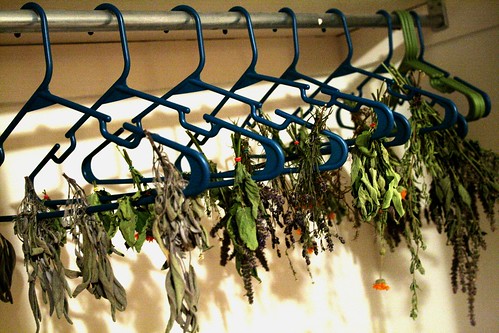
Now onto the whole point for my post. I got a nasty cough last week and it was dry and non-productive and annoying and hurt every time I coughed deep into my chest. I normally would jump to my good ol' box of herbs but I knew I would have to make some licorice root tea and while it works fantastically for maladies such as I was suffering from..a het a het... I really don't like the taste of it, which is funny seeing as it's the one my husband likes the taste of  the best. I couldn't bring myself to drink it, whiny I know,  I mean I used to make and drink Chaparral tea for pity sake why I couldn't I suck it up and drink licorice root tea. But as I was getting a drink of water a few days ago and looking out my kitchen window, something orange caught my eye and as if beckoning to me, don't you remember me, you learned about me back in your days at NMSU on that herbal walk when you were studying local medicinal plants for the summer and getting paid. OK not the last part but it did catch my eye and I knew Globe Mallow was especially good for coughs. So I walked down there and snapped some pics for our blog and harvested some leaves and flowers to make tea with. Just so you know, however, morning is supposed to be the best time to harvest herbs but I needed it then and I knew it would be OK. I also snipped off several stems about 12 in long and hung them upside down in a closet in a warm room, for later use, perhaps this winter when it's pretty orange flowers will be replaced by snow on the ground and I won't be able to just go pick it at my leisure.


So here's some facts coming your way about the diverse GLOBE-MALLOW: Is a quite reliable plant that is utilized throughout the entire southwest. It's still used as a medicinal plant today and the entire plant was used as a food source in times of need by many South-West Indian tribes. The Navajo word for globe-mallow translates to "medicine that covers." The liquefied roots of this plant help to stop bleeding and are used as a treatment for skin diseases. Globe-mallow is one of the Navajo Life Medicines and is used to treat stomachaches, improve appetites, cure coughs and colds. Globe Mallow ranges in elevation from 3,000 to 8,000 feet. This perennial herb grows from three inches to five feet in height. The tiny hairs on the entire plant can be irritating to the eyes, which is how the name “sore-eye poppy” came into use. Globe-mallows of the mallow family show their orange to red-orange colors in the spring and summer. Blossoms resemble miniature hollyhocks and are especially common along roadsides, although you don't want to gather it from a busy roadside, not because it's not safe to stop to get it but because of the pollution from vehicles passing by. 

It has also been used to strengthen the voice. I wanted to wait to post this until today since I knew I would be starting voice lessons again and wanted to put it to the test especially since this cough isn't entirely gone and what I noticed today was the same thing I noticed when I made and drank the tea a few days ago. It seemed to make my throat feel cleaner and better in some way that's hard to explain...drink it and try and put it in your own words. When I drank it the first time my cough was dry and the next morning it started to become productive and the heaviness in my chest was nearly gone. I am very pleased with this herb all around and its mild taste and will be adding it to my herb medicine chest. To read a little more about Globe Mallow go to this link. It goes into more depth about what it does.                                                                                                                                                       


Tea infuser

How to make your own herbal tea: The general rule is to add one tablespoon of dried herb to one cup of water. If using fresh herbs double it to two tablespoons steep in boiled water 10-15mins. The part of the herb being used determines how it's prepared, most leaves and flowers will acquiesce there healing properties in an infuser while leathery leaves, bark ,and roots must have them extracted by a decoction by boiling in water for 2-5mins and then steeped for 10-15mins. Strain the herbs out before you drink your tea. I included a picture of the tea infuser. This is my favorite way to prepare tea only because I know if I make a whole pot of tea it will go to waste so I prefer to make it cup at a time. The purpose of the lid is to preserve some of those healing properties after you pour boiling water over  your herbs. It may smell great after it starts to steam but you want to preserve as much of the healing properties as possible. When you put the lid on, the steam condenses and falls back into the water. If your goal is to break up a cough or if you have a cold then drink the tea hot but if not drink it through out the day a sip here a sip there. You can drink up to four cups a day. Also remember that people respond differently to herbs. Some may respond faster than others. If you respond slowly, it may take a few days to feel a difference. We're conditioned to think we must feel a difference right away and if we don't then it's not working but restoring balance to the body is no small task...nuff said :)  


One last word on the matter and then I promise I will shut-up :)-  Where ever you live you should become well acquainted with all local herbs in your area and region. For me that would be the SouthWest. Of coarse you should get to know all herbs... you know since there are only a few..haha. But since so many well known herbs don't grow naturally in my area, like stinging nettles for instance, it will not do me as much good if I don't have a large supply. Besides it's fun and fulfilling to see herbs in your area and feel confident that if you need them you know where to find them and how to prepare them for others health and well being as well as your own. There are some books I have had my eye on for some time, especially this one for the Southwest. There are plenty of books out there for any area of the country.  So "Go read some boouks" -Naucho Libre                                                  


Friday, September 16, 2011

Making Re-usable Baggies

My son modeling the finished product :)


We cut our gallon baggie to measure 24in x 11 1/4in. You will need this much material in both the PUL fabric (Never heard of me? well you can purchase me at JoAnn's and other sewing shops may carry me in more colors but will likely make me more pricey) for the inside of the baggie, and a fabric of your choice for the outside of the baggie. A sandwich baggie measures 14in x 7in and a snack size baggie measures 7in x 8 3/4in. Of course you can make them whatever size suites your fancy, this is just the size we made them, which is the size of standard Zip-loc bags. You will also need velcro and thread for this project. Okay...lets get started :)

1) Measure and cut both your fabrics to the same size. Hint at bottom of page: *If we could turn back time*
2) Fold fabric right sides together. Start sewing with a 1/4in seam allowance around two edges of the baggie leaving one edge left open. (We should have had a better thread color, the white makes it hard to see but you can see it a little bit in the lower right hand corner of the baggie.)                                                                                                  
3) You will do the same thing with the PUL fabric EXCEPT you will leave 2-3 inches on the bottom edge unsewn. (Shiny sides are right sides).
4) Cut the velcro to 11 3/4in for the gallon size bag or measure out and cut velcro to fit the size of bag you are making.                                                                                                                           
5) Turn PUL fabric right side out. Place top of velcro 5/8in from top of PUL fabric. Line up the side edge of the velcro with the side seam of the PUL fabric and the opposite side with the folded edge of  the PUL fabric. Pin the velcro...you may skip this step if you're like me but if you're like Carla, you'll pin it :) Sew one side at a time. Sew around all edges of velcro.                                                                                                                                                                                                                 
Tip: The reason we place it 5/8 in down from top is so that it is easier to open. Get creative! If you want  tabs on the outside of the baggie to pull it open, then you could put your velcro almost to the top of the baggie.  Just make sure you leave enough room for top stitching.

6) If there is a small gap no biggie, we're not putting liquid in these bad boys, just match up the velcro so it closes properly.
Tip: Velcro can weaken your thread so just make sure your stitches aren't skipping.
7) Slip the PUL fabric inside your other fabric. Pin fabrics together and then sew with a 1/4 in seam allowance. 
8)
 
9)

10) Push the PUL fabric back inside your printed fabric to form the baggie.
11) Pin and then top stitch close to the edge. 


YOU'RE DONE!!  Now go fill your cute little baggie with your favorite snack…happy munching :)

Hint** If we could turn back time**We noticed that the PUL fabric bunches a smidge and it would be a better overall fit if we cut the PUL fabric 1/4in smaller in length and width.

Be creative! If you make any modifications we would love to have you share it with us :)

A special shout out to our talented sis-in-law Keri for showing us this neat project a few months ago, thanks!

We want to hear from you! Do you think this project relates to self-reliance?